

Chemical or Organic Fertilizers? ...and the debate continues!
What plants uniquely understand is that nutrients remain nutrients, and these are among the essential elements they need, among other things, for their growth.
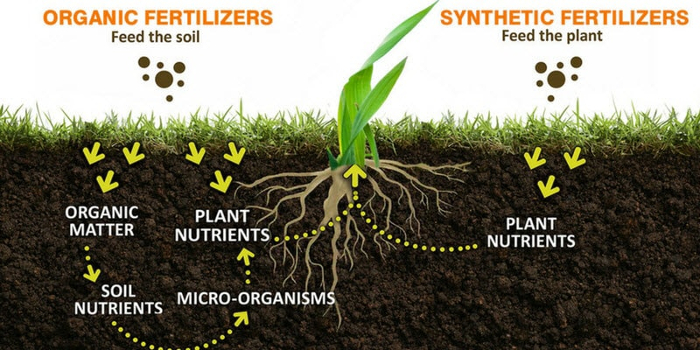
Based on which criteria does the conscientious farmer make this decision?
It would be useful to begin by clarifying some terms in order to avoid any confusion and misinterpretation.
On product packaging, there are many different terms and labels, such as: organic, inorganic, chemical, synthetic, artificial, and so on…
The good news is that, to begin with, we can limit ourselves and focus on two basic categories, organic and chemical, and make our final choice based on these classifications.
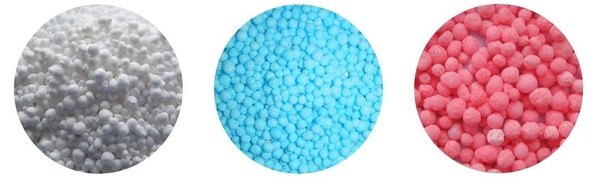

They are usually sold as "soil conditioners" rather than fertilizers because the nutrient ratios are difficult to guarantee.
Advantages of organic fertilizers:
- In addition to releasing nutrients, as organic fertilizers decompose, they improve soil structure and increase its ability to retain water and nutrients. Over time, organic fertilizers will make your soil and plants healthier and stronger.
- Since they are slow-release fertilizers, it is very difficult to over-fertilize and ultimately harm your crops.
- There is minimal risk of the accumulation of toxic chemicals and salts that can be harmful or even devastating to plants.
- Organic fertilizers are renewable, biodegradable, sustainable, and environmentally friendly.
- Although the cost of ready-made organic fertilizers is relatively high, a farmer could produce their own organic fertilizer (through livestock farming operations).
Disadvantages of organic fertilizers:
- Microorganisms are required to break down organic fertilizers and release nutrients into the soil. Since they need warmth and moisture to perform their function, the effectiveness of organic fertilizers is seasonally limited. The good news is that these microorganisms obtain energy from the decomposition of plant and animal materials, so applying organic fertilizer provides a complete package of nutrients for your soil.
- Organic fertilizers break down according to nature’s processes, meaning they may not release nutrients exactly when you need them. You need to be patient — you will not see improvements overnight. In fact, you may notice nutrient deficiencies in your plants during the first few months until the initial application begins to show its true benefits and potential. Do not be discouraged! Persistence pays off!
- Nutrient ratios are often unknown, and the overall nutrient content is lower than that of chemical fertilizers. However, some organic products have higher concentrations of certain nutrients.
- Οι αναλογίες των θρεπτικών συστατικών είναι συχνά άγνωστες και το συνολικό ποσοστό τους είναι χαμηλότερο από εκείνο των χημικών λιπασμάτων. Ωστόσο, ορισμένα οργανικά προϊόντα έχουν υψηλότερες συγκεντρώσεις σε συγκεκριμένα θρεπτικά συστατικά.
Chemical fertilizers
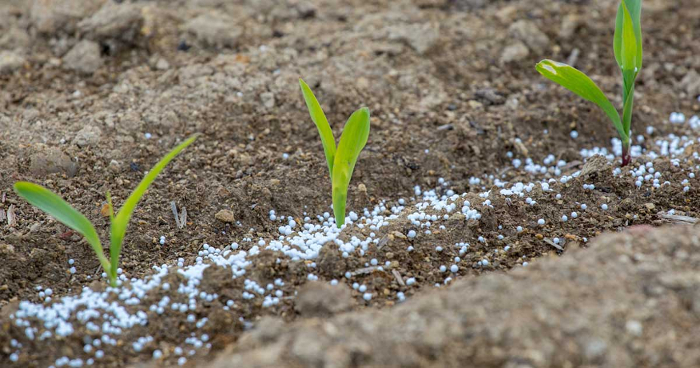
Some of the chemical compounds may be natural, but the difference is that the nutrients in chemical fertilizers are refined into their pure form and stripped of substances that regulate their availability and breakdown, something that rarely occurs in nature.
- Since the nutrients are immediately available to plants, improvement appears within a few days.
- They are manufactured in a specific way to produce the exact ratio of the desired nutrients.
- The standardized label now makes it easy to understand the ratios of the nutrients contained in the product.
- They provide a cost-effective solution.
Disadvantages of chemical fertilizers:
- Chemical fertilizers are mainly derived from non-renewable sources, including fossil fuels.
- They are essential for plant growth, but they do nothing to support the soil. They do not promote soil life, soil health, or soil structure. In fact, chemical fertilizers do not replace many trace elements that are gradually depleted by repeated crop production, resulting in long-term soil degradation.
- Because nutrients are immediately available, there is a risk of over-fertilizing a crop. This can not only burn the plants but also disrupt the entire ecosystem.
- Chemical fertilizers tend to leach away or become unavailable to plants, requiring continuous additional applications.
- Repeated applications may lead to the toxic accumulation of chemicals such as arsenic, cadmium, and uranium in the soil. These toxic substances may eventually find their way into the consumer’s food chain.
- Long-term use of chemical fertilizers can alter soil pH, disrupt beneficial microbial ecosystems, increase pest populations, and even contribute to the release of greenhouse gases.
Paying particular attention to the ingredients contained in these products, as well as educating ourselves about how, why, and where they originated, would greatly contribute to making better decisions regarding the nutrients that should be used in the field.
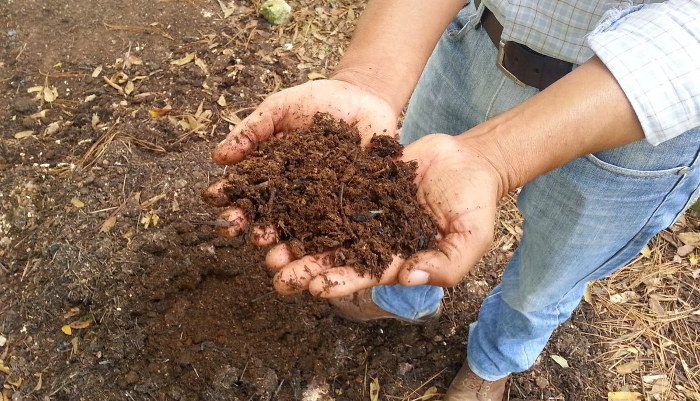
Certainly, both are needed because the plant will eventually be harvested and removed, providing the producer with a clear source of income.
However, what remains is the soil, and if it is damaged, the next crop will not thrive.
On the other hand, the world cannot be fed solely with manure and compost.