
SOIL HEALTH
The Soil Engineer – the Earthworm
|
A Brief Introduction to LIVING SOIL
|
 |
| Photo: Luca Conte, SEIAB |
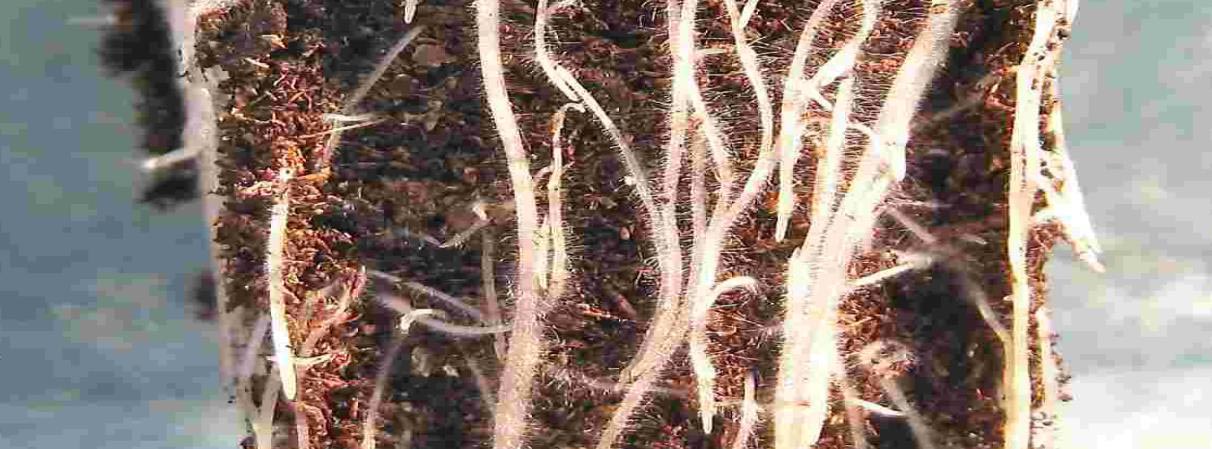
- Soil is defined as the upper layer of the Earth’s loose outer mantle, formed through the weathering of rocks and biological activity. It is distinguished from the underlying layers by the presence of organic matter, plant roots, and soil biodiversity. For plants, soil is not only an important source and reservoir of nutrients but also a factor that enhances their health and their ability to withstand pests and diseases. In general, soil is characterized by its significant regulatory role within the agroecosystem and is now considered a non-renewable resource. It is estimated that up to 1,000 years are required to form just one centimeter of arable soil, while soil communities of organisms exhibit the highest species density, with more than 1,000 species of invertebrates found in just 1 m² of soil.
-
 Agroecology Greece is a network and platform dedicated to promoting and highlighting Agroecology as a Science, Practice, and Movement. Its purpose is to connect researchers and educators, mainly from the agricultural and technical fields, to facilitate information sharing, knowledge exchange, and research. It aims to foster familiarity with the principles and framework of Agroecology in Greece and support the transition of food production systems towards a sustainable model, while contributing to Food Security and Self-Sufficiency.
These elements constitute only a small fraction of the soil (less than 5%, while in Greece they are usually around 2%). Nevertheless, they perform important functions for plant cultivation. They serve as a source of nutrients for plants and soil organisms, increase water-holding capacity, provide a loose soil structure, and reduce fluctuations in soil temperature. Low levels of organic matter in agricultural soils can cause a range of problems, such as nutrient deficiencies. In general, the reduction of organic matter decreases the efficiency and economic viability of production inputs for farmers, especially in organic farming (mechanical interventions, fertilization, plant protection, and irrigation).
Soil hosts a significant diversity of organisms (soil biodiversity). Soil biodiversity provides important functions in agricultural production, such as increasing soil fertility through the decomposition of plant and animal residues, maintaining and enhancing the food chain, and limiting soil-borne pathogens.
Poor management and inappropriate interventions in soil can cause and intensify various soil-related problems, with direct consequences for crops. Examples of poor management include the use of soil disinfectants, which leads to the accumulation of pathogens due to the destruction of competitive microflora. The simultaneous destruction of beneficial and multifunctional microflora makes the use of fertilizers necessary, as the ability to recycle and utilize the existing nutrient reserves of the soil is reduced. In turn, the use of synthetic fertilizers further worsens the situation by limiting microbial activity and creating unfavorable chemical conditions in the soil (e.g., reduced development of nodules in legumes after nitrogen fertilization, either in nitrate or ammonium form, changes in soil pH, etc.).
Soil cultivation should be carried out at the appropriate moisture level and to the minimum extent possible, as incorrect soil management practices can lead to a series of problems, such as: a) oxidation/loss of organic matter due to aeration of the soil surface layer and reduced soil cohesion, b) soil compaction and the formation of a dense layer, resulting in reduced soil aeration and water permeability, with adverse effects on seed germination, root respiration, and root development, and c) a reduction in the diversity of soil organisms and their associated benefits.
 |
|
|
Currently, approximately 33% of the world’s soils are moderately to highly degraded (FAO 2015, International Year of Soils). The agricultural practices applied within the framework of agroecology restore the functioning of the agricultural ecosystem through the preservation of soil health. The agroecological approach begins with the restoration of soil life in order to restore and/or enhance the multiple biological processes that are soil-dependent. This requires increasing and monitoring soil organic matter and biodiversity.
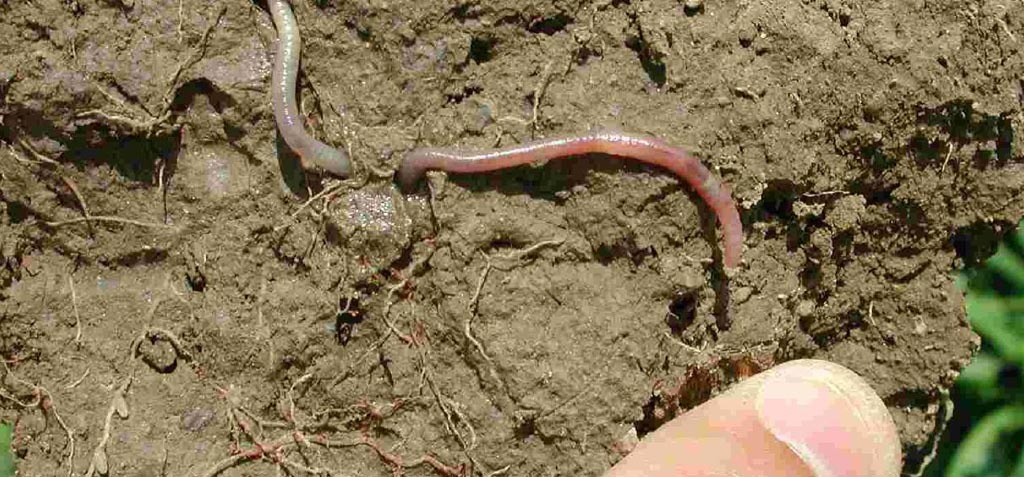
An important ally of the farmer is the earthworm
- It creates tunnels in the soil through which air and water can move. Additionally, these tunnels allow plant roots to reach deeper soil layers.
- They reduce soil compaction.
- Their castings are rich in nutrients and promote the development of beneficial bacterial populations.
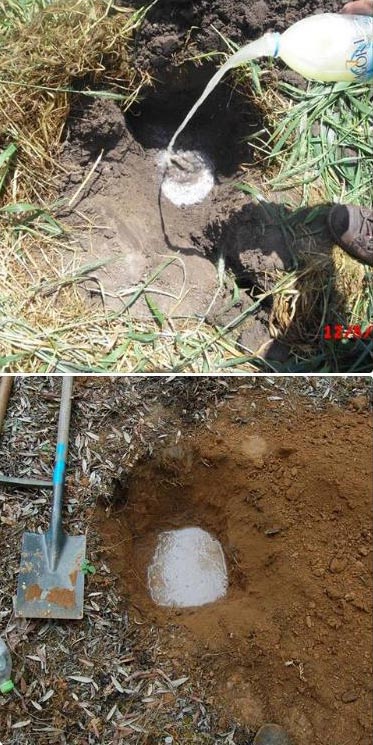
Photo: Christina Vakali
COUNT THE EARTHWORMS
2. Then, 2 liters of water are applied, to which 2 teaspoons of Sinapis seed powder (mustard, available in supermarkets) have been added.
3. Within a period of 20 minutes, the earthworms emerge from the deeper soil layers, allowing them to be collected and counted.
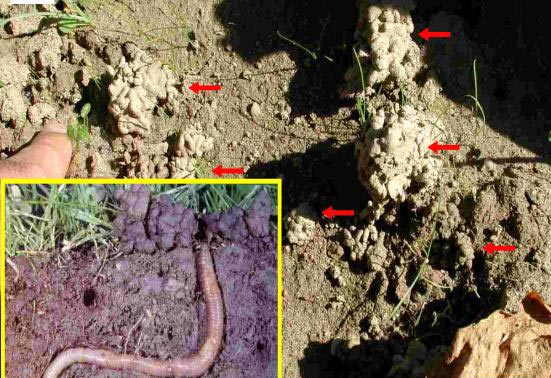
Photo: Luca Conte, SEIAB
Caution: When examining soil for earthworms, avoid areas with piles of manure or compost. Their population is unevenly distributed within a field and shows seasonal variations. For this reason, it is recommended to repeat the measurement during a growing season and use the average value to monitor population trends over time.